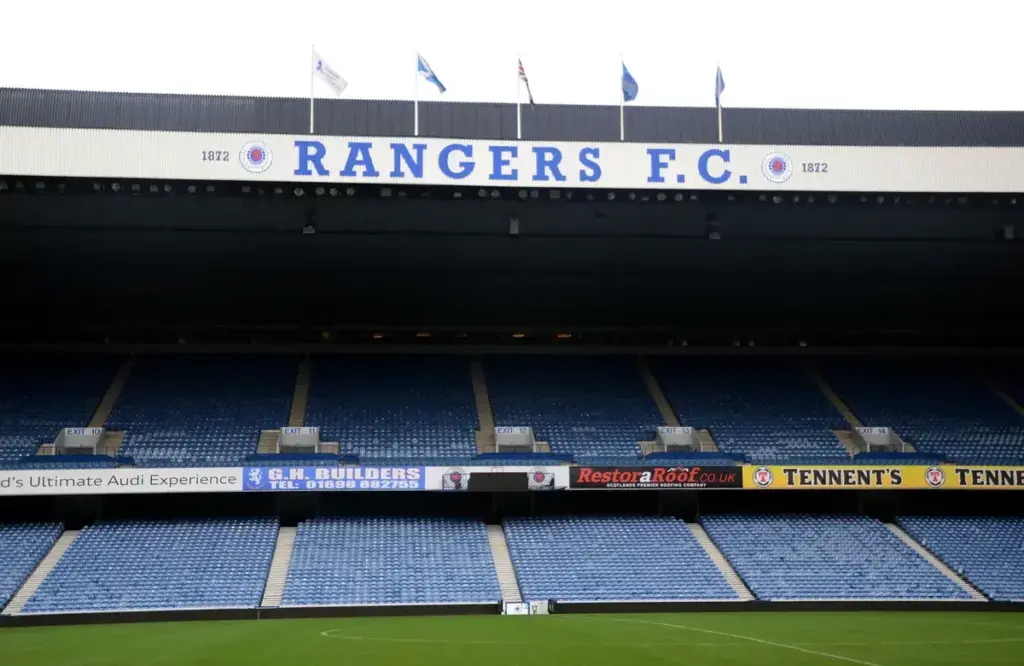
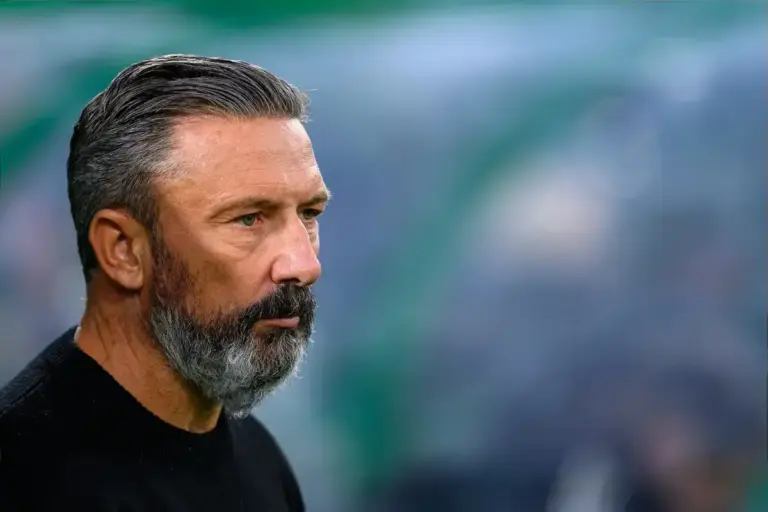
Derek McInnes has inherited a Rangers job that cannot be reduced to a transfer window.
That is the easy framing, of course. New manager arrives. Squad needs surgery. Supporters demand signings. Every midfielder with a decent passing range becomes a rumour, every striker becomes a solution, and every pre-season friendly becomes a referendum with shin pads.
But the first real test for McInnes is wider than that.
The Derek McInnes Rangers rebuild already has a fixture shape, a new performance structure forming around Stig Inge Bjornebye, a major Nicolas Raskin decision and a West Ham friendly that will offer supporters an early public checkpoint.
That is not one question.
It is four questions arriving at once.
McInnes Has Been Handed A Compressed Runway
Rangers have appointed McInnes on a three-year deal after his strong spell at Hearts, with Danny Röhl leaving for RB Salzburg.
That gives Rangers clarity in the dugout, but it does not give McInnes much drift space.
ReadRangers has already covered how the Derek McInnes Rangers appointment has an immediate first test after the fixture release, and the calendar shows why.
Rangers open the Premiership season away to Dundee United on Friday 31 July. Their first home league match follows against Hibernian on Sunday 9 August.
Then comes the first Old Firm fixture at Celtic Park on Sunday 20 September.
European qualifying also lands in early August, with Rangers entering the Europa League third qualifying round. That means McInnes has to install principles, assess players, influence recruitment and prepare for Europe before the season has even settled.
There is no soft opening here.
The awkward part for Rangers is that early-season judgement rarely waits for full context. A draw away from home can become a character debate. A poor European half can become a transfer panic.
A flat attacking display can reopen every argument about recruitment, coaching and mentality.
McInnes has managed in Scotland long enough to understand that rhythm. Controlling it is the harder part.
The First Month Must Become A Whole-Club Operation
Rangers cannot treat July and August as a coaching block alone.
Recruitment, sports science, medical planning and tactical selection all have to work together because there will not be spare weeks to tidy things up quietly.
That matters when Europa League qualifiers arrive on 6 and 13 August. ReadRangers has already explained what happens if Rangers lose their Europa League qualifier, and that risk now belongs to McInnes’ first month.
Those European ties are not a side story.
They can affect budgets, morale, recruitment timelines and the pressure around every league result. A clean start in Europe would give the rebuild oxygen. A stumble would make every unresolved squad issue feel heavier.
That is why Rangers need to look organised quickly.
McInnes teams are usually built on structure, physical reliability and clear player roles. Rangers need those qualities immediately, not as a winter project.
Tannadice on a Friday night is exactly the kind of fixture that can expose whether a side is serious or merely talented.
Raskin Could Define The Market
Nicolas Raskin’s situation is the obvious high-click story, but it is also a serious football decision.
The Rangers midfielder has addressed speculation around his future while away with Belgium at the 2026 World Cup, with Atalanta interest part of the current noise. His answer was careful rather than conclusive: focus on Belgium, leave the rest to the people handling his future.
For Rangers, that is uncomfortable but potentially useful.
ReadRangers has already covered how Nicolas Raskin’s Rangers transfer uncertainty gives McInnes an early call, and it may become one of the defining decisions of the summer.
Raskin is one of the squad’s most sellable assets.
A strong World Cup profile could increase interest and strengthen Rangers’ negotiating position. Yet selling him would also remove one of the few midfielders capable of giving the side bite, tempo and forward drive in the same package.
McInnes’ decision is not simply keep or sell.
It is whether Rangers can replace Raskin’s function if the money becomes too good to ignore.
That distinction matters. Clubs get into trouble when they sell a player and only replace his position. Rangers would need to replace his role.
If they cannot, keeping him may be worth more than the fee.
Bjornebye’s Role Matters Because Rangers Need Better Systems
The Bjornebye appointment is less glamorous than a striker rumour, but it may be more revealing.
Reports say Stig Inge Bjornebye has moved into a performance director role after previously working with Rangers in an advisory capacity. The reported remit covers performance departments and the academy setup, with first-team matters still central.
That kind of role only matters if it changes behaviour.
Rangers have too often looked like a club trying to solve structural problems with individual fixes. A new centre-forward here, a new winger there, a late-window scramble when a planned move stalls.
Better clubs make the system do more of the work.
ReadRangers has already looked at why the Stig Inge Bjornebye role shows Rangers’ rebuild goes beyond McInnes, and that is the key point.
McInnes needs support around him, not just expectation on top of him.
If Bjornebye’s brief brings sharper alignment between the first team, recruitment, academy and performance, then the manager benefits before a ball is kicked.
That does not guarantee success. It does, however, make better decisions more likely.
The West Ham Friendly Is A Public Checkpoint
Rangers’ pre-season friendly against West Ham United at Ibrox on Sunday 26 July gives the rebuild a visible staging post.
Supporters will not care about the result in isolation. They will care about signs.
Is there a clear midfield shape? Does the front line press with purpose? Are Rangers defending transitions properly? Does the team look fitter, sharper and less passive?
Those are pre-season questions, but they are not meaningless.
They also connect directly to recruitment. If Rangers still look short of legs in midfield by that point, the Raskin question becomes sharper. If the team lacks threat between the lines, McInnes will need more than a traditional number nine.
If the back line struggles when asked to defend higher, centre-back planning becomes an urgent conversation rather than a background file.
That is the value of a proper final friendly. It turns assumptions into evidence, even if that evidence still needs to be handled with caution.
A new manager can buy patience by making progress visible.
McInnes will know that.
The Fixture List Gives Rangers An Immediate Standard
The SPFL fixture list has given Rangers a fast standard to meet.
Dundee United away opens the campaign. Hibernian come to Ibrox next. Aberdeen away follows later in August, before Celtic Park arrives in September.
That is a demanding early rhythm for a manager trying to build authority.
Rangers do not have the luxury of slowly discovering themselves. Last season’s failures cannot be solved by talking about standards. They need to show up in pressing distances, second-ball reactions, defensive set pieces and awkward away games.
McInnes does not need Rangers to look complete in week one.
He does need them to look coached.
That is the difference. Supporters will accept some rough edges if they can see a clear idea forming. They will not accept drift dressed up as transition.
Verdict: Rangers Must Win The Alignment Contest
Rangers do not need to win the summer headline contest.
They need to win the alignment contest.
If Raskin stays, McInnes has a midfielder who can be central to the next version of the team. If Raskin goes, Rangers need a replacement plan that is already alive before the sale happens.
If Bjornebye’s role is meaningful, the club should start making quicker and cleaner football decisions. If the fixture list is unforgiving, Rangers must become harder to play against immediately.
That is the real test.
McInnes has not inherited a blank page. He has inherited a club with pressure, urgency and moving parts everywhere.
The rebuild will only work if those parts start pointing in the same direction.

Comments.
Loading comments…