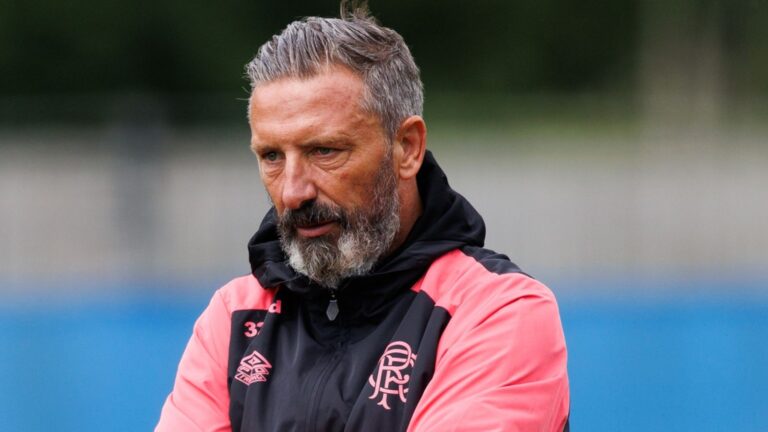

Lewis Ferguson is exactly the kind of name that can make a Rangers transfer window lose its discipline.
He is Scottish. He has a Rangers background. He has a family name that still carries weight at Ibrox. He was given his senior lift at Aberdeen by Derek McInnes. He is now Bologna captain, a Scotland international with tournament visibility, and a midfielder whose market has moved well beyond the neat romance of a return home.
That is why the latest noise around Ferguson matters. The Scottish Sun reports that Rangers are among the clubs interested after Scotland’s World Cup campaign, with Atalanta, Lazio and possible Premier League suitors also circling. The same report points to Italian claims that Ferguson would consider interest from big clubs or England on his return from the tournament.
For Rangers, this cannot be treated as a sentimental audition. It is a hard recruitment question at the centre of McInnes’ first serious rebuild: is Ferguson the kind of premium midfield signing who changes the level, or is he now operating in a market band that forces Rangers to solve two other positions instead?
As our manager in 2026. Derek McInnes.
— Rangers Football Club (@RangersFC) June 25, 2026
The Ferguson Appeal Is Obvious, But That Is The Danger
There is an easy version of this story. Rangers bring back one of their own, McInnes reunites with a player he knows, and the midfield gains a captain who has survived Serie A rather than merely flirted with the idea of moving abroad.
That version is too clean. It ignores the reality of Ferguson’s career arc.
Bologna list Ferguson as a 26-year-old midfielder, born in Hamilton, standing 185cm and wearing the No.19. Those are profile details, not proof of value. The proof sits in how his reputation has hardened in Italy: from Aberdeen export to Bologna leader, from promising Scottish midfielder to a player being measured against Champions League-level and Europa-level recruitment lists.
The Scottish FA profile notes his status as a senior international and points to the wider significance of his Bologna spell, including his part in the club’s Coppa Italia success. That matters because Rangers have spent too long buying either potential that needs time or experience that is already sliding down the curve. Ferguson sits in the more difficult, more expensive bracket: prime-age authority.
That is exactly why the chase is complicated. If Atalanta and Lazio are genuinely in the conversation, Rangers are not simply bidding against admiration. They are bidding against Serie A continuity, European football, wage structures and the pull of staying in one of the top five leagues.
Why McInnes Makes The Link Feel More Credible
McInnes is not a minor part of the Ferguson story. He gave Ferguson his Aberdeen debut and worked with him through the early stages of a career that has since moved sharply upward. In a market crowded with agents, analytics departments and inflated valuations, direct managerial trust still has value.
Rangers have made that authority part of the public sell. When the club confirmed McInnes on a three-year contract, they highlighted his vast experience, his five-year playing spell at Ibrox, and his understanding of what winning at Rangers means. Andrew Cavenagh also pointed to his Scottish and Rangers experience as important parts of the appointment.
That background makes Ferguson an obvious fit in human terms. McInnes knows the player. Ferguson knows the demands of Scottish football. Rangers know the value of adding a midfielder who would not need a six-month education in the emotional weather around the club.
But trust is not a blank cheque. The new Rangers structure is supposed to be sharper than that. Dan Purdy’s recruitment operation and Stig Inge Bjornebye’s performance brief exist so that big decisions are not driven by one familiar relationship. Ferguson may pass every character test. The harder question is whether he passes the resource-allocation test.
| Rangers question | Ferguson answer | Risk |
|---|---|---|
| Leadership | Bologna captain and Scotland regular | Premium price attached |
| League readiness | Developed in Scotland before thriving in Serie A | Return may be seen as a step down |
| McInnes fit | Existing relationship from Aberdeen | Familiarity can distort valuation |
| Squad balance | Ball-carrying, aggression and authority in midfield | Could depend on Nicolas Raskin movement |
The Raskin Variable Changes Everything
The obvious route into this discussion is Nicolas Raskin. Read Rangers has already covered why the Raskin valuation call is one of McInnes’ first major tests, and previous claims have framed Ferguson as a possible part of a wider midfield reshuffle.
That is where this story becomes less about one player and more about the shape of the rebuild. If Rangers could use Raskin’s market to create room for Ferguson, the idea has a logic. You are not simply adding another expensive midfielder; you are changing the personality of the department.
Ferguson would bring more vertical presence than a possession recycler. He is not a pure No.10, not a sitter, not a tidy passer bought to keep the ball moving sideways. His best work has usually come from arriving into advanced zones, competing physically, reading second balls and adding emotional authority to the middle of the pitch. That profile would appeal to McInnes because it translates directly to the ugly parts of Scottish Premiership title races.
Still, Rangers have to be cold. If Raskin leaves for major money, the club may need more than one midfielder. They may need a goalkeeper decision, defensive depth, a right-sided solution, and another forward option depending on how McInnes wants to build around Lawrence Shankland. Spending too much of the budget on one romantic midfield return could leave the squad better in one place and thinner in three others.
That is the trap. Ferguson feels like a statement signing, but Rangers need a functioning team before they need a statement.
Serie A Competition Sets The Real Price
Atalanta and Lazio interest, if firm, is not just background colour. It sets the temperature of the negotiation.
Atalanta can offer a recent model of elite player development, European exposure and a system that suits intense midfielders. Lazio can offer Rome, Serie A status and Maurizio Sarri’s technical structure. Premier League clubs can offer money Rangers should not try to match unless the player is absolutely determined to come back to Glasgow.
That is why Ferguson’s own preference becomes central. Rangers can compete when the player actively wants the move. They cannot win an open auction if the deal becomes purely financial.
This is where McInnes’ relationship helps, but only to a point. A phone call from a manager who knows you is powerful. So is the promise of being central to a title challenge. Yet Ferguson has built his reputation by backing himself away from Scotland. Returning at 26 would need to feel like a footballing acceleration, not a nostalgic retreat.
Rangers can make that case only if the wider plan is convincing. The pitch cannot be, ‘come home because it feels right.’ It has to be, ‘come to Ibrox because this team is being rebuilt to win now, and you are being signed as one of its leaders.’
The Verdict: Rangers Should Push, But Only On Their Terms
There is a version of this deal that makes enormous sense. Ferguson gives McInnes a trusted, prime-age midfielder with edge, height, game intelligence and a proven capacity to carry responsibility. He would also instantly sharpen the Scottish core of a Rangers squad that has too often felt assembled rather than rooted.
There is also a version that becomes dangerous quickly. If Bologna’s price climbs because of tournament visibility, if Italian clubs turn interest into bids, or if the deal becomes dependent on an awkward Raskin exchange, Rangers must be prepared to walk away.
McInnes’ first summer cannot be about collecting players he likes. It has to be about building a squad that can survive Dundee United away, European qualifiers, Old Firm pressure and the weekly low-block grind that has undone better-looking Rangers teams than this one.
Ferguson would not be a vanity signing. He is too serious a player for that. But he would be a major call at a major price, and the decision will tell us plenty about how this new Rangers structure really works.
If romance leads the process, Rangers will overpay. If discipline leads it, Ferguson becomes what he should be: a high-level target worth pursuing hard, but not at the expense of the rebuild McInnes has only just started.