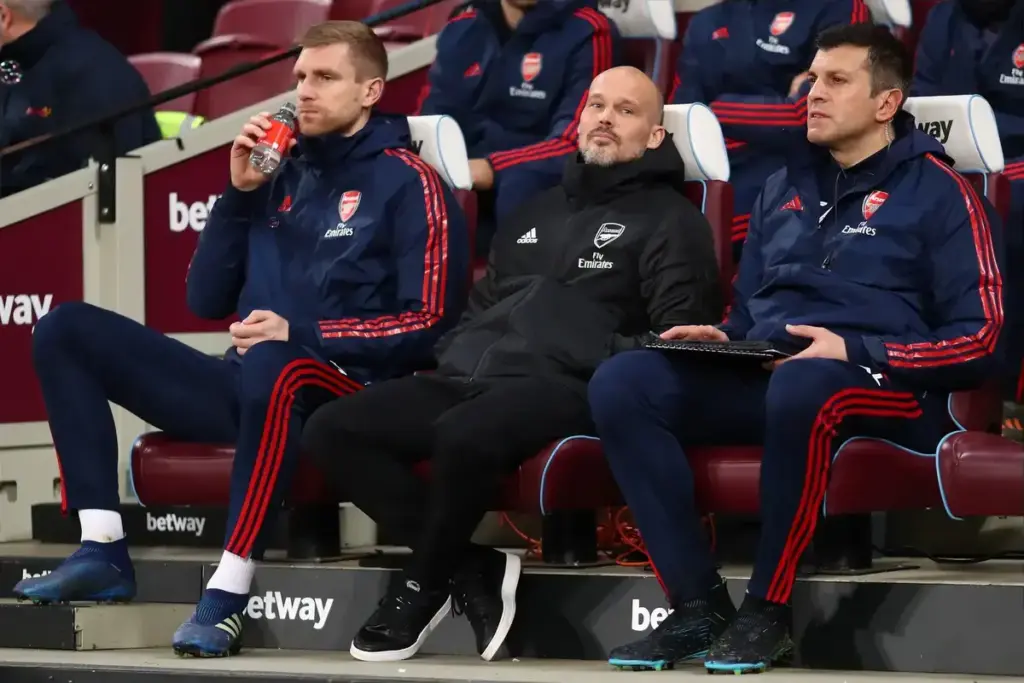
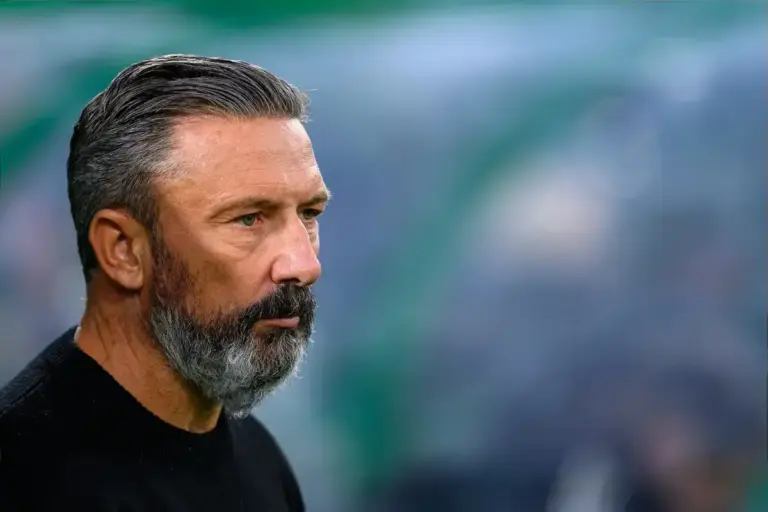
Sal Bibbo’s departure should not be treated as a backroom footnote. For Derek McInnes, it lands right in the middle of the most sensitive technical reset at Rangers.
The Scottish Sun reports that Bibbo has left Rangers to join newly promoted Premier League side Coventry City, creating a goalkeeping-coach vacancy just as McInnes is trying to reshape his squad and settle the spine of his team. The timing is awkward. Rangers are not simply changing a coach. They are changing the daily voice around a department already braced for major movement.
The goalkeeper picture is live. Jack Butland’s future has been tied to Hull City, Ivor Pandur has been linked as the incoming replacement, and the new manager needs clarity before the fixtures start to bite. A goalkeeping coach leaving at that precise moment makes the next appointment more than a staffing exercise.
Why Bibbo’s Exit Hits A Department Already In Motion
The first-team goalkeeping unit is never detached from the tactical plan. It governs distribution, set-piece organisation, penalty preparation, defensive communication and the small technical details that decide whether a keeper looks calm or exposed.
Bibbo had already spoken publicly about the strength of the group during his time at Rangers. In a club interview earlier this year, he described the daily competition inside the goalkeeping department, which underlined how much of that role is built on relationships as well as drills. That connection now has to be replaced quickly.
The issue is not sentiment. Staff move on. Coaches follow opportunities. Coventry’s promotion has given Frank Lampard’s club a Premier League platform, and Bibbo’s experience at Reading, Arsenal, Sheffield Wednesday and Rangers gives them a credible appointment.
For Rangers, the problem is timing. McInnes is still building authority. He is still setting training standards. He is still assessing which inherited voices fit his model and which roles require fresh appointments. Losing a specialist coach during that process forces him to make a decision that will touch every part of the defensive structure.
The Butland-Pandur Question Makes The Role Bigger
The vacancy would be notable in any summer. It becomes sharper because the goalkeeper position itself is unsettled.
talkSPORT has reported that Rangers are close to a deal involving Pandur, with Butland expected to head to Hull. That would give McInnes a new No. 1, a new goalkeeping coach and a defensive line already adapting to fresh recruits and a different manager.
That is a lot of change in the one area of the team where trust is supposed to be invisible. A goalkeeper needs to know how his coach wants him to handle crosses, where the centre-backs expect him to start, how quickly he should release the ball and what the team’s set-piece triggers look like.
If Pandur arrives, the next goalkeeping coach cannot be a passive appointment. He has to be part of the integration plan from day one. Rangers need someone who can teach, challenge and translate McInnes’ tactical demands into daily habits.
The wider squad context matters, too. The recent ReadRangers analysis of the Pandur-Butland situation framed the No. 1 decision as a gamble with major upside. Bibbo’s exit adds another layer to that gamble. The man coaching the next No. 1 may now be someone entirely new.
What McInnes Must Prioritise In The Replacement
Rangers should not simply search for a high-profile former goalkeeper. The job is more specific than that.
The replacement must fit McInnes’ football. If the manager wants Rangers to defend higher, play out with more control and squeeze opponents into their own half, the goalkeeper coach has to prepare the keeper for larger spaces and quicker decisions. If the plan is more conservative, the emphasis changes toward box command, shot volume, aerial traffic and second-ball management.
That is why this appointment should be judged through three practical filters.
- Distribution detail: Rangers need a keeper who can start attacks without turning every restart into a risk.
- Set-piece command: The coach must harden the relationship between goalkeeper, centre-backs and blockers in a league where dead balls decide tight games.
- Transition control: If McInnes pushes the back line up, the keeper has to become a sweeper as well as a shot-stopper.
Those are not buzzwords. They are the job description.
McInnes has worked with experienced goalkeeping voices before, and the obvious route would be to appoint someone he already trusts. That would reduce the bedding-in time and give the manager immediate alignment on training detail. The danger is becoming too familiar. Rangers need the best fit for this squad, not simply the most convenient name in the manager’s contacts.
The Backroom Reset Is Now Part Of The Rebuild
Supporters naturally focus on signings. Lawrence Shankland, Ross McCrorie, Ben Godfrey and the Pandur pursuit all carry more obvious transfer-window heat than a coaching-staff change. But elite teams are not built by recruitment alone.
The backroom defines what those recruits become after they walk through the door. A weak coaching structure turns good signings into isolated pieces. A strong one turns them into habits, partnerships and repeatable patterns.
That is why Bibbo’s exit matters. It removes a specialist voice from a department about to be rebuilt. It also gives McInnes a chance to impose his own standard immediately.
The club’s previous staff structure had already shifted across the last year. Rangers confirmed Bibbo’s original appointment as part of the men’s first-team coaching staff in 2025, and that unit has since lived through managerial change, squad churn and a fresh summer reset.
McInnes now has to decide whether he wants continuity with the existing goalkeeping school or a clean break that matches his own methods.
The Verdict: A Small Exit With A Large Technical Shadow
On the surface, this is a coach leaving for a Premier League job. Underneath, it is a test of how quickly Rangers can align their football operation around McInnes.
If Butland goes, Pandur arrives and a new goalkeeping coach follows, Rangers will have changed the keeper, the specialist coach and the tactical context around the position in one summer. That can work, but only if the club move decisively.
The worst outcome would be drift. A temporary solution through pre-season. A goalkeeper learning one set of habits in July and another in August. A defensive line trying to settle while the coaching language changes around it.
The best outcome is cleaner. McInnes appoints quickly, chooses a coach who matches the game model, and gives his goalkeeper department one clear voice before the serious fixtures arrive.
That is why Bibbo’s departure matters. It is not the biggest Rangers story of the window, but it touches the part of the team that can make every other summer decision look either secure or fragile.
The next appointment will also reveal how Rangers want to operate under the current football structure. A reactive club waits for the goalkeeper market to finish, then hires around the outcome. A serious one appoints the coach as part of the outcome, making sure the recruitment department, manager and training pitch are speaking the same language before the new No. 1 is asked to carry the shirt.
That distinction is important because this is not only about Pandur or Butland. It is about how quickly Rangers can reduce the number of unknowns around McInnes. The manager already has enough open questions in defence, midfield balance and attacking supply. The goalkeeping department should now become one of the first areas where the club delivers clarity.
McInnes has been handed an early staff-room call with real first-team consequences. Get it right and the goalkeeper reset can become part of the new Rangers structure. Get it wrong and the uncertainty in the No. 1 position will feel wider than one shirt.


Comments.
Loading comments…