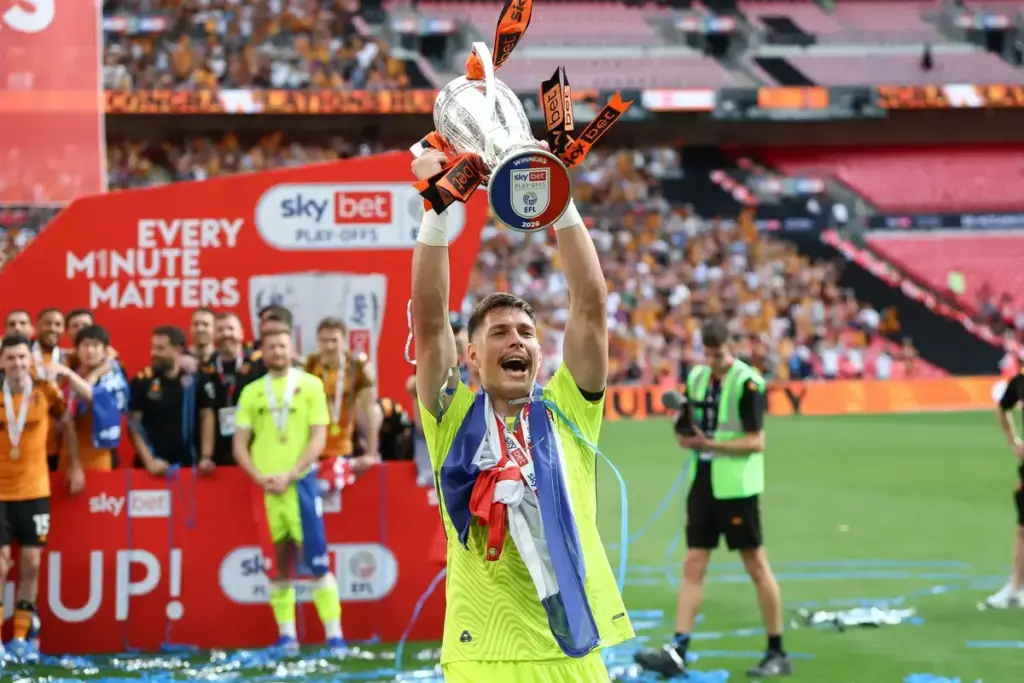
Goalkeeper transfers are usually judged through the obvious numbers: fee, age, contract length, clean sheets, resale value. Rangers’ pursuit of Ivor Pandur carries all of that, with reports placing the Croatian at the centre of a deal that would bring him from Hull City while Jack Butland moves in the opposite direction.
Yet the most revealing detail around Pandur this week was not the reported £6million valuation, the World Cup squad status, or the expected reshaping of Derek McInnes’ goalkeeping department. It was the story of what he did after Hull won promotion.
According to The Scottish Sun, Pandur skipped Hull’s all-expenses-paid Las Vegas celebration and instead chose a quieter break in Croatia before joining up with the national team. For most signings, that would sit as a colourful personality note. At Rangers, in this particular summer, it becomes more useful than that.
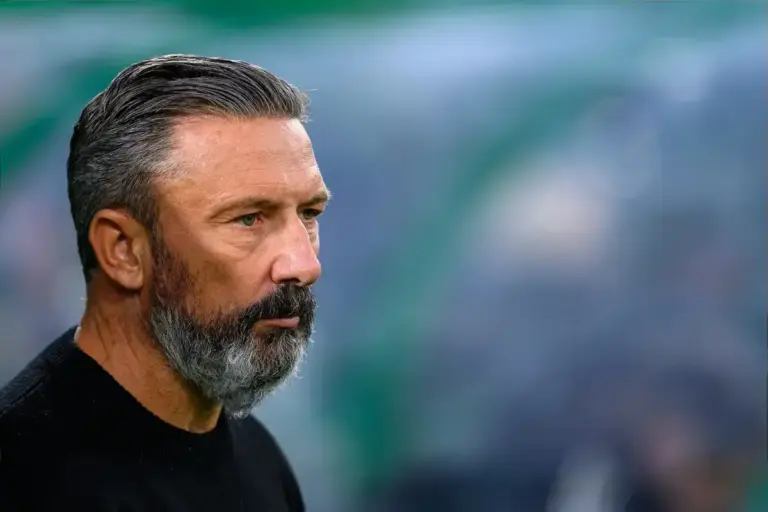
McInnes is not simply buying a goalkeeper if this deal goes through. He is setting the emotional tone of a rebuild that has already moved through Lawrence Shankland, Ross McCrorie, Ben Godfrey and a hard reset around senior dressing-room standards. A goalkeeper who appears comfortable choosing preparation over theatre fits the profile of the Ibrox summer in a way that is difficult to ignore.
The Butland-Pandur Deal Is A Bigger Statement Than It Looks
talkSPORT reports Rangers are closing in on Pandur in a £6million move, with Butland set to join Hull City in a separate £3million deal. The Scottish Sun has also reported the transactions as separate deals, with Pandur expected to sign a three-year contract at Ibrox.
That matters because this is not a simple exchange of names. Butland has been Rangers’ established No.1, a high-earning senior player, and a goalkeeper with Premier League pedigree. Moving him on while paying a larger fee for a 26-year-old successor tells supporters exactly where McInnes and the recruitment department believe value now sits.
The club are not merely cutting salary. They are trying to move toward a younger, more durable asset with upside. That is a more demanding calculation, because replacing authority in goal is never theoretical at Rangers. Every mistake is amplified. Every corner carries noise. Every clearance is judged against the weight of Ibrox impatience.
That is where Pandur’s profile becomes interesting. He is not arriving as a teenage punt. He is not a veteran stop-gap. He is in the prime-age bracket for a goalkeeper who has already lived through the Championship’s weekly grind and is now part of Croatia’s World Cup environment. That is a rare mix for Rangers: enough experience to be trusted quickly, enough runway to justify the fee.
It also continues a pattern. Rangers have already used the market to bring in known competitors rather than speculative passengers. Shankland gives McInnes a reference point in the final third. McCrorie restores a Scottish core. Godfrey, confirmed by Rangers on a season-long loan from Atalanta, adds athleticism and top-league experience. Pandur would give the back line a new voice behind it.
Why The Quiet-Life Detail Actually Matters At Ibrox
There is a danger in over-romanticising personality clues. Plenty of disciplined players fail. Plenty of charismatic ones thrive. But football clubs still use habits as evidence, especially in positions where technical skill alone is not enough.
A Rangers goalkeeper has to live with long spells of little action before making one decisive intervention. He must organise defenders in hostile stadiums, manage tempo when the crowd wants panic, and keep authority after the first bad moment. That role is less about constant involvement than constant readiness.
Pandur’s reported decision to return home instead of joining Hull’s Vegas celebration does not guarantee any of that. What it does suggest is a personality comfortable with restraint. That is not a minor detail for a goalkeeper moving into a club where the emotional temperature rarely drops.
The timing sharpens the point. Rangers are entering a season in which McInnes has no bedding-in luxury. Recent ReadRangers coverage has already examined how the manager’s rebuild is being judged through immediate pressure, recruitment discipline and the need for cleaner defensive structure. The goalkeeping call sits at the heart of that.
Butland’s exit, if completed, removes a player with stature. Pandur’s arrival would have to replace not only saves, but command. The first weeks would test his communication with Godfrey, John Souttar, McCrorie and whichever full-backs McInnes settles on. It would also test whether Rangers have bought a goalkeeper for their idea of football, not merely a name who became available through Hull’s own financial pressures.
That is the real difference between this deal and a routine transfer. Pandur would arrive as part of a wider statement about standards. McInnes has been brought in to narrow the gap between intention and output. A goalkeeper who brings calm, durability and personal discipline gives him a better platform to do that.
The Data Case Is Useful, But The Fit Case Is Stronger
The available football evidence supports the interest. The Scottish Sun reported Pandur was named in Croatia’s 26-man World Cup squad and signed for Hull from Fortuna Sittard in 2023. Other reports around the deal note that he played a major role in Hull’s promotion campaign before becoming available in a market shaped by Profit and Sustainability Rules.
Those are solid markers. A goalkeeper trusted through a promotion season is not being assessed from clips alone. He has handled pressure games, changing game states, and the physical profile of English football. That background should travel well to Scotland, where the demands are different but not softer.
Still, the deeper Rangers question is fit. Can he play higher when McInnes wants his defensive line to squeeze? Can he recover after a mistake at Ibrox? Can he give the back four the certainty that allows Rangers to defend set plays with conviction rather than anxiety?
Those are the parts that will decide whether £6million looks like smart succession planning or an expensive gamble. At 26, Pandur should be entering the stage where goalkeepers begin to pair athletic sharpness with better game management. Rangers are effectively paying to capture that rise before it becomes fully priced by the Premier League market.
For a club that has too often lived in expensive short-term fixes, that is at least coherent. Selling Butland for a fee after signing him as a free agent and reinvesting in a younger goalkeeper is sensible trading if the replacement performs. It also lowers the average age of a crucial spine position while giving McInnes a player he can build around beyond one campaign.
McInnes Needs Characters, Not Just Signings
The most encouraging part of Rangers’ summer is that the business is beginning to reveal a manager’s preference. McInnes appears to want players who understand consequence. Shankland understands Scottish pressure. McCrorie understands the club. Godfrey understands elite physical standards. Pandur, if the move lands, brings a quieter but equally relevant trait: control.
That does not remove the risk. Butland’s departure would still leave a leadership gap. Pandur would still need to adapt quickly to a club that measures goalkeepers by silverware, not promise. The fee would still make him one of the defining decisions of the window.
But this is the sort of risk Rangers should be taking. It is targeted, age-aware, and tied to a wider squad reset. The quiet-life story matters because it supports the sense that Pandur is not being recruited only for reflexes. He is being recruited for temperament.
If McInnes is serious about changing Rangers’ habits, the new No.1 cannot be a passive part of the rebuild. He has to set a rhythm from the back. He has to look like a player who arrives ready for the noise, not seduced by it.
Pandur’s choice after Hull’s promotion does not win him the Rangers shirt. His performances will have to do that. But it does offer a useful early clue. In a summer defined by standards, the incoming goalkeeper already looks like someone who understands the value of choosing the quieter, harder road.

Comments.
Loading comments…