After Sunday’s post-match Old Firm flare-up, there has been blame apportioned to both clubs and both sets of supporters from various media sources.
Each different report tends to differ in its conclusions depending on the personal leanings of the respective authors.
Rangers-leaning commentary pointing towards Celtic supporters and Celtic-leaning analysis focusing on Rangers fans.
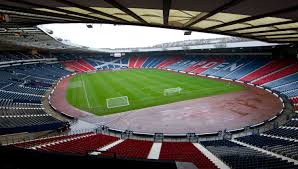
There has also been criticism of the policing strategy deployed at Ibrox, with a particularly notable lack of presence behind both goals during and after the penalty shootout when compared with the far heavier segregation typically seen during meetings between the sides at Hampden.

Where was the Police presence?
Police Scotland were quick to condemn the scenes.
Chief Superintendent Kate Stephen said: “The behaviour of a number of supporters at the Scottish Cup quarter-final between Rangers and Celtic at Ibrox today was shameful.
“It must be condemned by everyone involved in football and wider society.
“Officers and stewards were faced with extreme hostility and violence over a sustained period, with many individuals having armed themselves with items clearly intended to cause harm.
“Officers and members of the public have been injured in this despicable display, and I want to express my thanks to all officers and staff deployed.”
A flashpoint waiting to happen
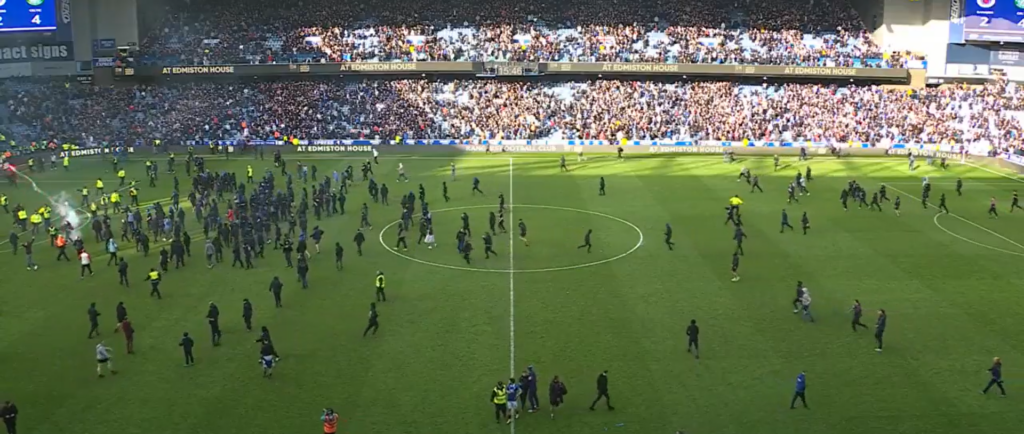
Now yes, the behaviour of supporters who entered the field and clashed with police and stewards was clearly out of order.
But it was also not entirely unexpected given the dramatic finish to the game and the heavily charged build-up around the return of a traditional away allocation at Ibrox.
When an Old Firm tie is decided by a 50-50 penalty shootout directly in front of thousands of visiting supporters, the emotional reaction, particularly after 120 minutes of tension, should hardly be surprising to anyone responsible for planning the matchday operation.
What was far more surprising was the lack of visible preparation for exactly that scenario.
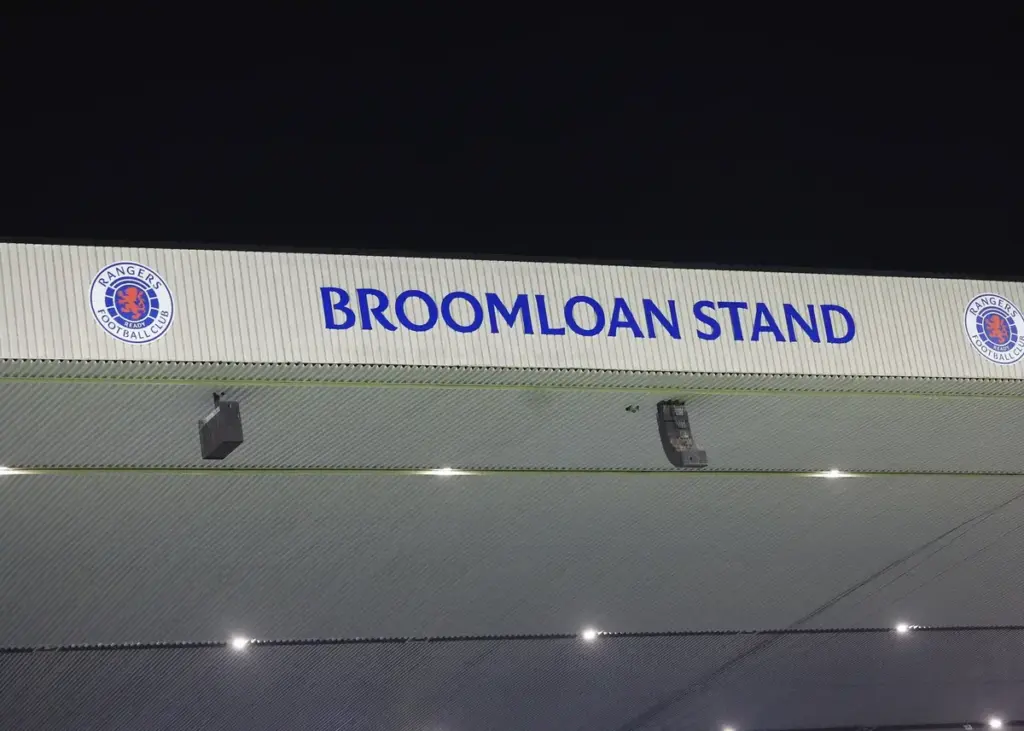
How was the possibility of a Celtic victory in a shootout not anticipated with a line of officers positioned along the Broomloan Stand?
Especially when there had already been a smaller-scale pitch incursion earlier in the match following Daizen Maeda’s disallowed goal.
An incident that should have served as a very clear warning that tensions were running high.
Instead, when the decisive penalties were scored, the space between the away end and the pitch appeared thinly staffed.
Anyone who has attended Old Firm matches at Hampden knows that those areas are normally heavily lined with police and stewards for precisely this reason.
The absence of such preparation at Ibrox looked less like misfortune and more like poor planning.
Yet even that may not be the central issue.
Because the deeper problem sits further up the chain of responsibility – with the Scottish FA.
Where the responsibility really lies
Rangers and Police Scotland had both reportedly expressed reservations about restoring a significantly boosted Celtic allocation for this fixture.
Concerns were raised about safety and matchday management.
Despite that, the governing body of Scottish football appeared determined to push ahead.
In fact, the Scottish FA had reportedly threatened legal action if Rangers refused to accept the suggested allocation of around 7,500 away supporters.
Warning that if the governing body prevailed in court, they could potentially award Celtic up to 20 percent of the Ibrox capacity – an unprecedented event.
In other words, the SFA was willing to escalate a dispute with one of its own member clubs to enforce a ticketing arrangement that they had already been warned could create difficulties.
Seen in that context, Sunday’s disorder begins to look less like an unpredictable outbreak of chaos and more like the consequence of decisions taken in Hampden boardrooms.
That does not excuse the behaviour of individuals who caused trouble. Personal responsibility still applies.
But it does raise serious questions about who ultimately created the circumstances in which those flashpoints became more likely.
The blame game

Stuart Murphy, chief executive of the Scottish Football Fans Association, described the situation bluntly as a “debacle”.
“I’m angry this morning,” he told BBC Radio Scotland.
“Actually, I’m angry on behalf of the majority of all decent fans, who will all feel tarnished and stained by that debacle yesterday, which is the only way to describe it.
“I was at the Old Firm cup final 45 years ago and, 45 years on, we’ve not moved on at all, so this morning is not a good day for the game in general.”
Meanwhile the Scottish FA issued a short statement on social media saying: “The Scottish FA condemns the behaviour from supporters entering the field of play following today’s Scottish Gas Scottish Cup Quarter-Final at Ibrox Stadium.
“An investigation will be carried out immediately in line with the Judicial Panel Protocol.”
That investigation will no doubt focus on identifying those responsible for the disorder.
But if Scottish football genuinely wants to learn anything from Sunday’s events, the spotlight cannot stop with supporters, stewards or even policing tactics.
It must also examine the decisions taken by the governing body that insisted this fixture be played under conditions many believed carried unnecessary risk.
While fans may have provided the flashpoint, it was the Scottish FA that helped load the chamber in the first place.






Comments.
Loading comments…