
“`html
Headline: McInnes Faces Defining Rangers Call Over Ivor Pandur
Content:
Transfer rumours can often be dismissed as noise, but some reveal the pressure points within a rebuild. Rangers’ reported interest in Hull City goalkeeper Ivor Pandur falls into the latter category.
The Daily Record, citing Alan Nixon, reports that Rangers want to explore a deal involving Jack Butland moving to Hull. This would be part of an attempt to land Pandur, with the Croatian goalkeeper valued around £10 million. The Scottish Sun frames it as a possible swap rather than a straightforward cash pursuit.
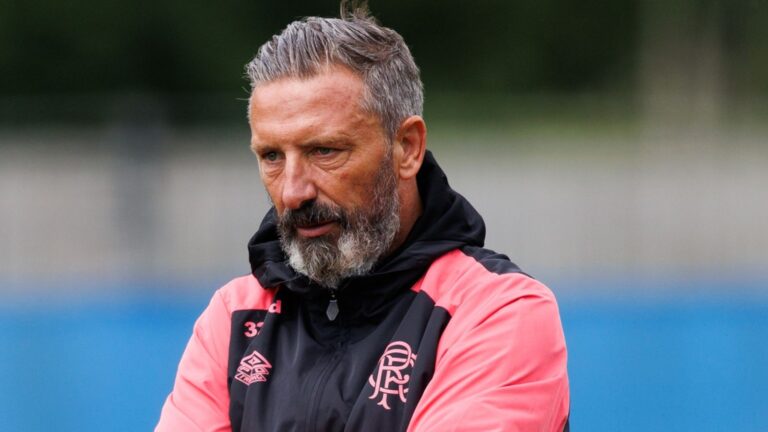
This distinction matters. Rangers are not merely seeking cover or making an opportunistic move. If they are willing to include Butland, Derek McInnes faces a clear decision. He must choose between protecting proven status or accelerating the squad reset with a younger, higher-value profile.
For a club that has moved quickly under its new manager, this decision will show supporters whether the rebuild is cosmetic or structural.
@RangersTV sat down exclusively with Derek McInnes on the day he was unveiled as manager at Ibrox today. He describes his return to Rangers…
— Rangers Football Club (@RangersFC) June 24, 2026
The Butland Question Is Bigger Than One Position
Butland has been a stable piece during an unstable Rangers period. He arrived with Premier League pedigree, carried authority, and provided a senior figure behind a turbulent defense.
This makes the Pandur link intriguing. Rangers are not linked with a low-risk backup. They are linked with a goalkeeper who, according to reports, would require creative financial structuring. A swap only makes sense if the club believes the position can be refreshed without draining the summer budget.
The counter-argument is experience. Butland knows Ibrox, understands the weight of the shirt, and has handled Glasgow football’s emotional temperature. For a new manager trying to establish control, removing that certainty carries risk.
Yet McInnes has not entered a settled machine. Rangers confirmed his appointment on a three-year contract last week, noting his return from Hearts and the addition of Alan Archibald, Paul Sheerin, and Craig Clark to his staff. The club statement highlighted his experience of over 800 matches in management and his playing history at Rangers between 1995 and 2000.
This background gives McInnes an immediate understanding of the standards. It does not remove the awkward truth: Rangers cannot keep making sentimental or comfort-based squad decisions while aiming to close the gap at the top of Scottish football.
Why Pandur Fits The New Recruitment Logic
Pandur is attractive because he represents a different type of asset. At 26, he is in the age bracket where goalkeepers can still increase in value while offering first-team maturity. Hull’s £10 million valuation would be expensive for Rangers in cash terms but more plausible if Butland reduces the net cost.
This is where the deal becomes a recruitment strategy rather than a rumour. Rangers have already made moves showing McInnes wants players who can handle domestic intensity immediately. Lawrence Shankland’s arrival from Hearts provided a proven Scottish Premiership goal threat, while Ross McCrorie’s return from Bristol City brought back a player developed in the Rangers academy and hardened by time in England.
The thread is clear. Rangers aim to reduce adaptation risk. Shankland understands the league. McCrorie understands the club. Pandur would be different because he has not experienced the Ibrox environment, but he fits the brief: value, athletic ceiling, and succession planning.
The goalkeeper market has changed. Elite clubs now expect more than shot-stopping. They want range in distribution, bravery in starting positions, repeatable command under pressure, and mobility to protect a higher defensive line. If McInnes wants Rangers to defend more aggressively and spend less time retreating, the goalkeeper profile becomes central to the tactical reset.
This does not mean Butland cannot play that role. It means Rangers must decide whether the next three years should focus on maintaining the current hierarchy or investing in a goalkeeper who might better align with a younger spine.
The Financial Side Makes The Deal Believable
The strongest part of the story is the structure. Rangers spending £10 million on a goalkeeper in a conventional deal would invite scepticism, particularly with work still required across the squad. A player-plus-cash idea is more credible because it turns a difficult valuation into a negotiation.
It also reflects the reality McInnes inherited. The club’s recent business has been active but targeted. They have not behaved like a side with unlimited room to gamble. Every serious incoming must be weighed against multiple needs: defensive depth, midfield balance, attacking output, and the risk of further movement around high-value players.
ReadRangers has already analysed why McInnes’ first Rangers rebuild needs sharp decisions. The Pandur issue would be the sharpest yet because it touches a popular senior player, a premium position, and the psychology of the dressing room.
There is also the Nico Raskin backdrop. Recent reports about Hull’s interest in Rangers players and previous discussions of Raskin-related swap possibilities have made the market feel more interconnected than usual. ReadRangers covered the Nico Raskin swap-deal claim earlier in the week, and the lesson is the same: Rangers are being pushed into creative structures because straight cash solutions are rarely simple.
If Hull wants Butland, Rangers have leverage only if they are truly prepared to lose him. If not, the story becomes posturing. If they are, then McInnes is preparing to redraw one of the most sensitive areas of the team before a competitive ball is kicked.
McInnes Cannot Afford A Half-Rebuild
Rangers supporters have heard the word rebuild too often for it to carry much comfort. The word only matters when it produces hard decisions. Moving on fringe players is not a rebuild. Signing familiar names is not automatically a rebuild. Changing the goalkeeper, leadership structure, and risk profile of the squad would be.
That is why the Butland-Pandur idea deserves serious attention even before formal movement. It asks what kind of Rangers team McInnes wants to put on the pitch.
A cautious version keeps Butland, adds around him, and leans on his authority while the manager settles the side. A bolder version looks at the age curve, market opportunity, and the chance to secure a goalkeeper with potential resale value, then accepts the short-term turbulence.
Neither route is risk-free. Keeping Butland may preserve leadership but delay succession planning. Pursuing Pandur may modernize the squad but remove a player who has already proven he can absorb Ibrox pressure. The answer depends on whether Rangers view 2026/27 as a stabilisation season or the first aggressive year of a new cycle.
The fixture calendar gives little room for drift. Rangers have confirmed they will open the new Scottish Premiership campaign away to Dundee United on Friday, July 31, before the early European qualifiers sharpen the stakes. McInnes needs clarity quickly, especially in goal, where uncertainty can infect the entire defensive unit.
The Verdict: This Would Be McInnes’ First Defining Transfer Call
At this stage, the Pandur link remains a reported pursuit rather than a completed negotiation. That distinction is important. Rangers have not announced an agreement, Hull has not confirmed an exit, and Butland remains a Rangers player.
Still, the logic is strong enough to treat the story seriously. Rangers need to think younger without losing standards. They need to increase asset value without weakening the starting XI. They need a squad that can handle McInnes’ demands immediately while also looking less stale than previous versions.
If the club can land Pandur on terms that make financial sense, the deal would signal a more ruthless rebuild than some expected. If they walk away and keep Butland, that may still be defensible, but only if the money is redirected into positions of greater urgency.
The key is decisiveness. McInnes has returned to Rangers with authority, history, and a board publicly aligned behind him. The goalkeeper call will show how much freedom he really has to reshape the spine.
For now, the rumour does what good transfer stories often do: it exposes the real question. Rangers are not just deciding whether Ivor Pandur is worth the chase. They are deciding how brave this rebuild is prepared to become.
“`